
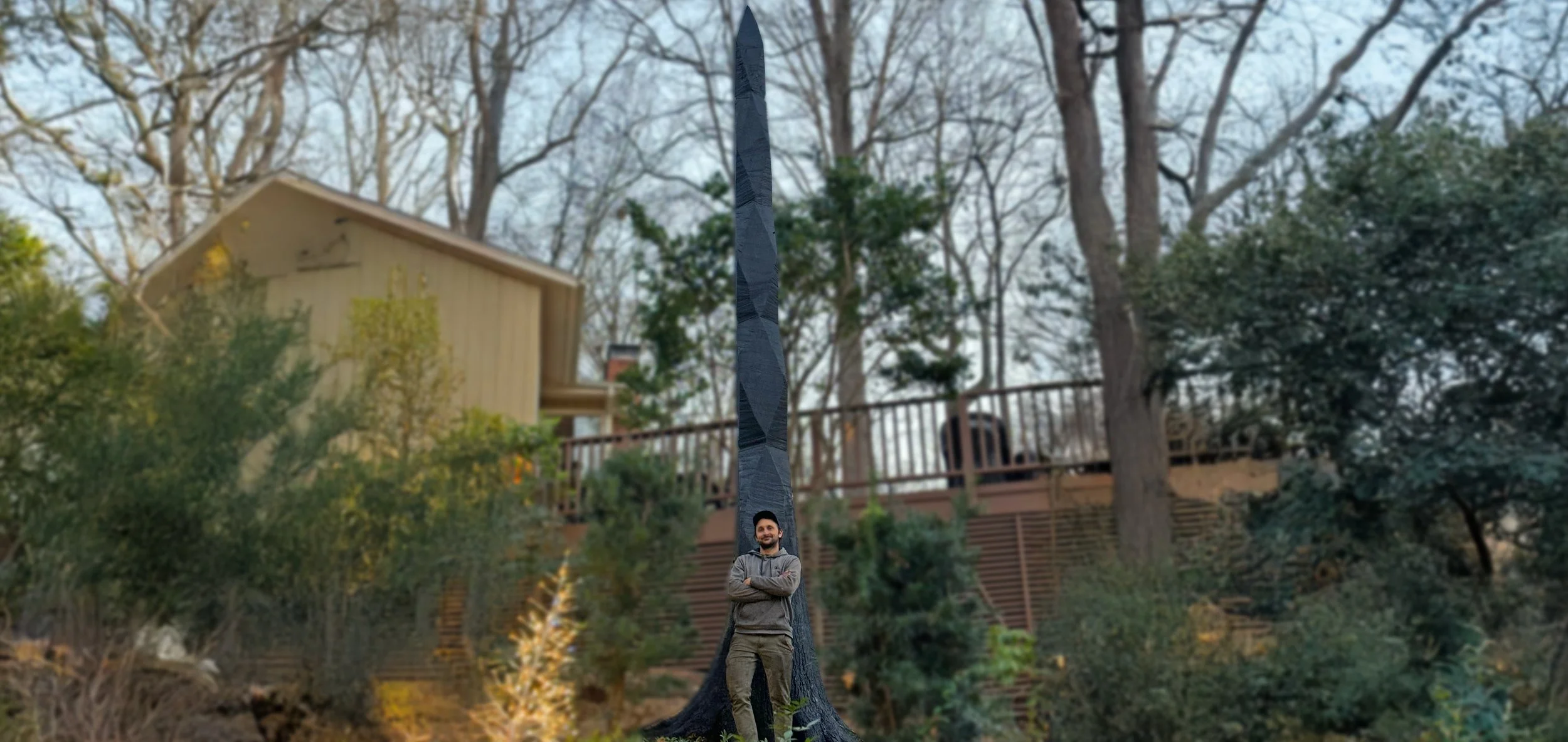
Pillar To The
Four Directions
Pillar to the Four Directions
Artist: Gray Edgerton
Be sure to check out MAC Landscape! They are our goto team for all of our landscaping, lawn care and creative design!

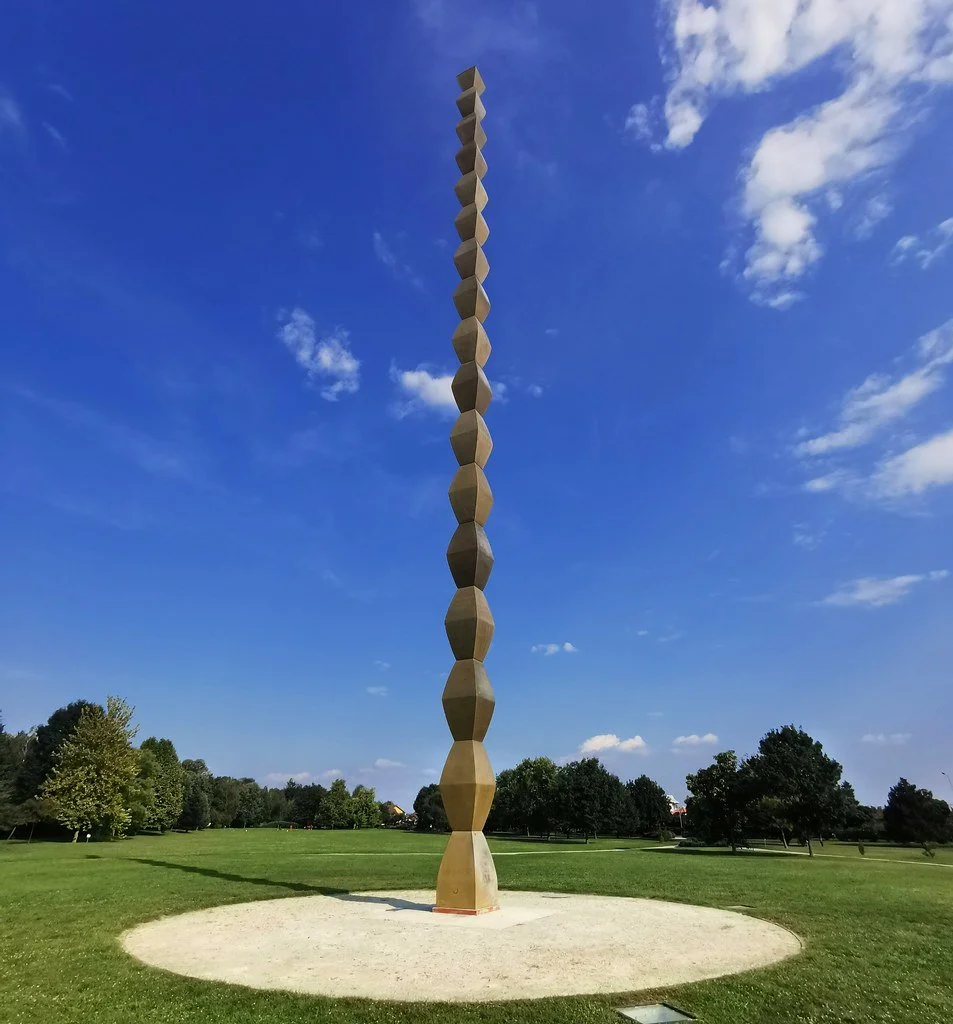
Axis Mundi
An axis mundi—a Latin phrase meaning “axis of the world”—is a powerful concept found across cultures, religions, and mythologies. It refers to a symbolic center point that connects different realms of existence: the heavens above, the earthly plane, and the underworld below. In the academic field of comparative mythology, the axis mundi appears in many forms: sacred mountains like Mount Meru in Hindu tradition, the Norse world tree Yggdrasil, church steeples, obelisks, and even ladders or pillars in ritual spaces. These structures are not merely physical—they represent orientation, connection, and meaning. They tell us where we are in the universe.
At its core, an axis mundi grounds a community. It provides both a literal and symbolic center—a place where the human and the divine, the natural and the constructed, intersect.
Transforming Loss into Meaning
In Charlotte Serenity Garden, the creation of “The Pillar To The Four Directions” embodies this ancient idea in a deeply contemporary and ecological way. What was once a living tree, and later a dead and charred remnant, has been transformed into a new kind of presence—not erased, but reinterpreted.
Rather than removing the dead tree entirely, the decision to preserve its base acknowledges its history. Trees themselves have long been natural axis mundi symbols: rooted in the earth, rising toward the sky, and sustaining life in between. Even in death, this tree retains its vertical authority—its posture as a connector between worlds.
By reshaping it into a sculptural pillar aligned with the four cardinal directions—north, south, east, and west—the work reinforces its role as an orienting force. Visitors are not just looking at a sculpture; they are positioned by it. The directions invite awareness of place, movement, and the broader landscape beyond the garden.

The Significance of the Four Directions
The four cardinal directions carry spiritual and cultural meaning across many traditions. In numerous Indigenous belief systems, for example, each direction corresponds to elements, seasons, stages of life, and guiding principles. Aligning the sculpture to these directions transforms it into more than a memorial—it becomes a compass of reflection.
Standing before “The Pillar To The Four Directions,” a visitor is subtly encouraged to consider:
Where am I coming from?
Where am I going?
How do I situate myself in the world?
This directional awareness echoes the original purpose of the axis mundi: to orient not just the body, but the spirit.

Preservation Through Fire: A Japanese Influence
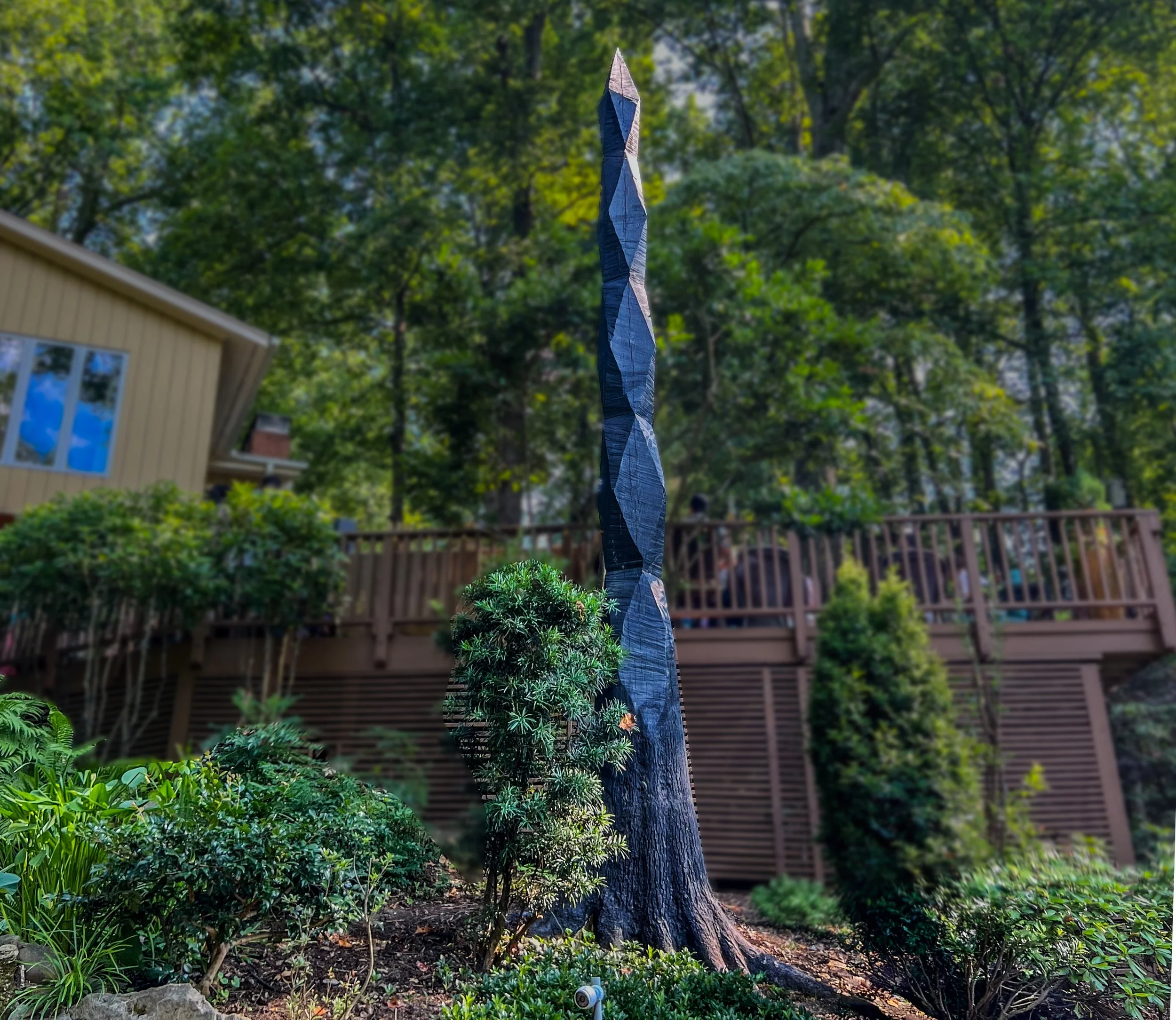
An especially striking aspect of the sculpture is its charred surface, created using a traditional Japanese wood-preservation technique known as Shou Sugi Ban (or Yakisugi). This method involves carefully burning the outer layer of wood to protect it from decay, insects, and weathering.
Fire, often associated with destruction, is here used as a tool of preservation and transformation. The charred surface gives the pillar a dark, textured skin—both ancient and enduring. Symbolically, it reflects a cycle of death and renewal:
The tree died
It was burned
It was preserved
It was given new meaning
This process mirrors the philosophical depth of the axis mundi itself: a site where endings and beginnings meet.
A Living Center in a Contemporary Landscape
“The Pillar To The Four Directions” stands as a modern axis mundi—rooted in place, shaped by human intention, and layered with cultural meaning. It bridges natural history (the life of the tree), artistic intervention (the sculptural transformation), and spiritual symbolism (orientation and connection).
In a time when landscapes are often cleared and replaced, this project offers a different approach: preservation through reinterpretation. The base of the tree remains, anchoring the sculpture in its original soil. Its transformation does not erase its past—it elevates it.
Ultimately, the piece reminds us that centers are not always built from scratch. Sometimes, they are revealed—through care, creativity, and a willingness to see continuity where others might only see loss.